
Key Takeaways
The vehicles are changing, but great technicians are still defined by how they think, not just what they know.
Technical knowledge will always matter, but diagnostic strategy, adaptability, and communication are becoming increasingly important.
The best way to prepare for the future isn’t chasing every new technology; it’s developing the ability to learn continuously.
Shops will increasingly rely on technicians who can solve complex problems, collaborate with others, and adapt to new systems.
Most technicians didn’t enter the industry because they wanted an easy job. They entered because they enjoy solving problems.
That mindset has always been at the heart of automotive repair, and despite everything that’s changing across the industry, it remains one of the most valuable skills a technician can have. The automotive technician skills that matter most in 2027 combine technical proficiency with diagnostic discipline, adaptability, communication, and a commitment to continuous learning.
Yes, vehicles are becoming more sophisticated. For many diagnostic and repair procedures, technicians must now interpret scan-tool data, consult software information, and determine whether programming, initialization, or calibration is required. ADAS systems continue to evolve, hybrids and electric vehicles are becoming more common, and manufacturers are introducing new technologies at a rapid pace. It’s enough to make any technician wonder what’s coming next.
The good news is this: the future isn’t about replacing today’s technicians. It’s about expanding what it means to be a great one. Emerging technology is changing technicians’ responsibilities, but skilled professionals remain essential to accurate diagnosis, safe service, and reliable repair.
Five Essential Automotive Technician Skills for 2027
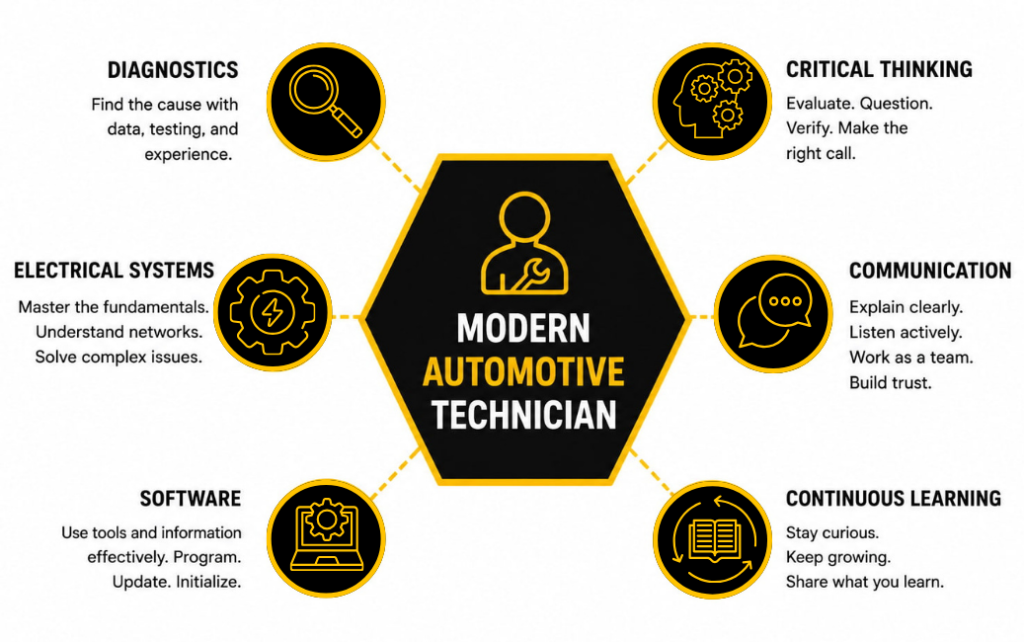
Advanced Diagnostic Strategy
Follow a repeatable process for gathering evidence, interpreting data, testing hypotheses, and confirming the repair.
Electrical and Vehicle-Network Troubleshooting
Understand electrical fundamentals, wiring diagrams, communication networks, voltage-drop testing, and waveform analysis.
Software, Programming & Info Profiency
Find OEM procedures, interpret scan-tool data, perform software updates, and know when programming or initialization is required.
ADAS and Electrified-Vehicle Awareness
Know when calibration, high-voltage safety procedures, specialized equipment, or additional training is required
Communication, collaboration & learning
Explain findings clearly, work effectively with service advisors and other technicians, share knowledge, and maintain a deliberate training plan.
Technical Skills Will Continue to Evolve
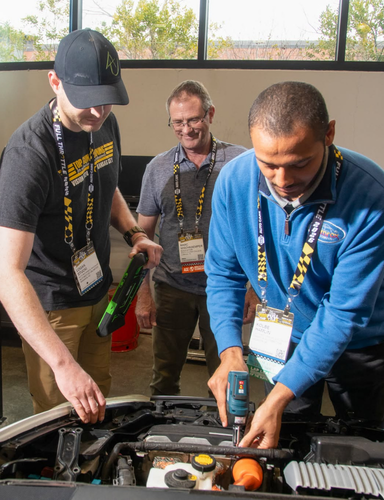
The list of technologies technicians need to understand keeps growing.
Advanced driver assistance systems require precise calibration. Vehicle networks have become increasingly complex. Many diagnostic and repair procedures now require technicians to interpret scan-tool data, consult current service information, and determine whether programming, initialization, or calibration is required. Even shops that do not specialize in electric vehicles increasingly need a working knowledge of electrified powertrains, high-voltage safety, and appropriate service procedures.
At VISION, we’ve seen growing demand for classes focused on diagnostics, EV technology, and hands-on learning experiences that help technicians apply new concepts in real-world scenarios rather than simply hearing about them. But while the tools continue to evolve, one thing hasn’t changed:
Technology doesn’t diagnose vehicles. Technicians do.
The Future Belongs to Great Problem Solvers
One of the biggest misconceptions about the future of automotive repair is that success will depend on memorizing every new system or becoming an expert in every emerging technology. In reality, that’s nearly impossible.
The technicians who will stand out aren’t the ones who know everything. They’ll be the ones who know how to think. They approach diagnostics methodically. They ask better questions. They understand how different vehicle systems interact. When unfamiliar data appears on a scan tool, they investigate systematically rather than jumping to conclusions.
Technology changes. Critical thinking doesn’t.
That’s why developing strong diagnostic strategy is one of the best investments any technician can make.
The Skills You Can’t Buy Off the Tool Truck
As vehicles become more complex, technical expertise becomes only part of the equation.
Successful technicians also know how to communicate their findings to service advisors, collaborate with teammates on difficult repairs, and continue learning long after formal training ends. These aren’t “soft skills.” They’re professional skills.
The technician who can explain a complex issue clearly helps the entire shop operate more effectively. The technician who mentors younger team members strengthens the next generation of the industry. The technician who remains curious instead of complacent is the one most likely to adapt as new technology arrives.
Those qualities are becoming just as valuable as technical knowledge itself.
Preparing for 2027 Starts Today
No one can predict every innovation the automotive industry will introduce over the next several years. What we do know is this:
The pace of change isn’t slowing down.
The technicians who embrace that reality, rather than fear it, will be the ones who continue building rewarding careers. That doesn’t mean chasing every trend. It means developing habits that make growth part of your career: attending training, learning from peers, asking questions, and staying engaged with an industry that’s constantly evolving.
Those habits don’t just prepare you for 2027. They prepare you for whatever comes after.
Continue Building the Skills That Matter
The future of automotive repair will not be shaped by technology alone. It will be shaped by the professionals who choose to keep learning alongside it.
Explore the VISION Resource Center for practical insights on diagnostics, leadership, shop management, and emerging industry trends. Then discover the technical and hands-on training opportunities available at VISION Hi-Tech Training & Expo, March 4–7, 2027, in Kansas City.
Ready to Continue Your Journey?
The best automotive professionals never stop growing. Explore VISION training opportunities designed to help you strengthen your skills, leadership, and career.
